Lakewood Ranch Fertility: Your Guide to Using Frozen Eggs
The Journey from Preservation to Pregnancy: A Complete Guide for Southwest Florida Professionals
Three years after freezing her eggs, a patient of Dr. Pabon, let’s call her Rachel in this story, sat in Dr. Pabon’s consultation room at the Fertility Center and Applied Genetics of Florida, her hands trembling slightly as she held a positive pregnancy test. At 32, she had been a rising vice president at a Tampa tech company, focused on establishing her career before considering motherhood. Now, at 35 and newly married, those preserved eggs had become the bridge between her younger self’s strategic planning and her current readiness to start a family.
“I remember the day I froze them,” Rachel recalls, her voice catching with emotion. “I was terrified I’d never use them, that it would be wasted money. But standing there pregnant, I realized it was the best investment I ever made—not just financially, but emotionally. I got to say yes to every career opportunity without that constant anxiety about my biological clock.”
Rachel’s story reflects a growing phenomenon in Lakewood Ranch and throughout Southwest Florida. Women who made the strategic decision to preserve their fertility are now returning to Dr. Pabon’s practice with a new question: What happens when I’m actually ready to use these eggs?
The answer reveals a sophisticated process that transforms preservation into pregnancy, but success depends heavily on the expertise guiding every phase from thaw through embryo transfer. For women who invested in their reproductive future, understanding this critical next chapter becomes essential to realizing the full value of that investment.
The Moment of Decision: When “Someday” Becomes “Now”
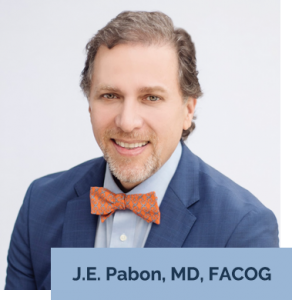
Dr. Pabon has witnessed the emotional complexity of this transition countless times over his 25 years of practice. “The women who return to use their frozen eggs often describe feeling a mixture of excitement, anxiety, and relief,” he observes. “They’re excited to finally start this chapter, anxious about whether it will work, and relieved that they preserved this option when they did.”
The triggers that bring women back vary widely. Some, like Rachel, have found life partners and feel ready to transition from career building to family building. Others have achieved specific professional milestones—the partnership they worked toward, the business launch they envisioned, the financial security they sought. A growing number are single women who decide to pursue motherhood independently, using donor sperm with their preserved eggs.
What surprises many women is the emotional weight of making the call. After years of the eggs existing as a kind of insurance policy, activating that policy requires crossing a psychological threshold. The abstract concept of “future family” becomes concrete and immediate.
“I kept putting off scheduling that first appointment,” admits another patient, a 38-year-old attorney who froze eggs at 34. “Not because I wasn’t ready, but because using them made it real. As long as they were frozen, they represented unlimited potential. Using them meant accepting that this was the path—and what if it didn’t work?”
This anxiety is precisely why Dr. Pabon’s approach emphasizes comprehensive consultation before beginning the process. Understanding the journey ahead, the realistic expectations, and the support available helps women move from anxiety to confidence.
Understanding the Complete Journey: From Frozen Assets to Growing Family
Unlike starting fertility treatment from scratch, women who return to use frozen eggs benefit from having already completed the most physically demanding phase. The eggs are preserved at their peak quality—whether that was at age 28, 32, or 36—meaning the body doesn’t need to undergo another ovarian stimulation cycle with its daily injections and monitoring appointments.
However, using frozen eggs does require a carefully orchestrated series of steps, each demanding precision and expertise. The difference between success and disappointment often lies in the laboratory capabilities and clinical experience managing this delicate process.
The Science and Strategy: Six Critical Phases
Phase One: Comprehensive Planning and Preparation
When women like Rachel return to Dr. Pabon’s practice, the process begins with thorough evaluation. This isn’t simply retrieving eggs from storage and moving forward—it’s strategic planning based on current fertility status, health changes since the eggs were frozen, and family building goals.
Dr. Pabon conducts comprehensive fertility hormone testing to assess current uterine health and readiness for embryo transfer. While the eggs themselves remain frozen at their original age and quality, the uterine environment must be optimized for successful implantation. For most women, the uterus maintains its receptivity well into the forties, but individual assessment ensures the best possible conditions.
The consultation also addresses practical considerations: How many eggs to thaw? Whether to fertilize all thawed eggs or proceed in stages? What role genetic testing should play? These decisions require balancing the desire to maximize chances of success against the practical and financial implications of each choice.
“We spend significant time in this planning phase,” Dr. Pabon explains. “Women who made thoughtful decisions about freezing their eggs deserve equally thoughtful guidance about using them. This isn’t a standardized process—it’s personalized medicine at its most crucial moment.”
Phase Two: The Thawing Process—Where Laboratory Expertise Matters Most
The moment frozen eggs are warmed represents the first critical test of the original laboratory’s expertise. Eggs frozen using modern vitrification techniques, like the flash-freezing method that prevents ice crystal formation, typically achieve survival rates of 90-95% when thawed by experienced embryologists.
However, not all laboratories achieve these outcomes. The Fertility Center’s advanced vitrification protocols and experienced embryology team consistently achieve survival rates at the higher end of this range, meaning women who preserved their eggs at FCAG (Fertility Center and Applied Genetics) benefit from both the original freezing excellence and the thawing expertise.
Rachel’s experience illustrates this advantage. “Dr. Pabon’s team thawed eight of my eggs. All eight survived. I didn’t realize until talking to other women how significant that was—some had lost 30-40% of their eggs in the thawing process at other facilities.”
The thawing process itself occurs under carefully controlled laboratory conditions with precise temperature management and timing. Each egg is evaluated immediately post-thaw to confirm viability before proceeding to fertilization.
Phase Three: Fertilization Through Advanced ICSI Technology
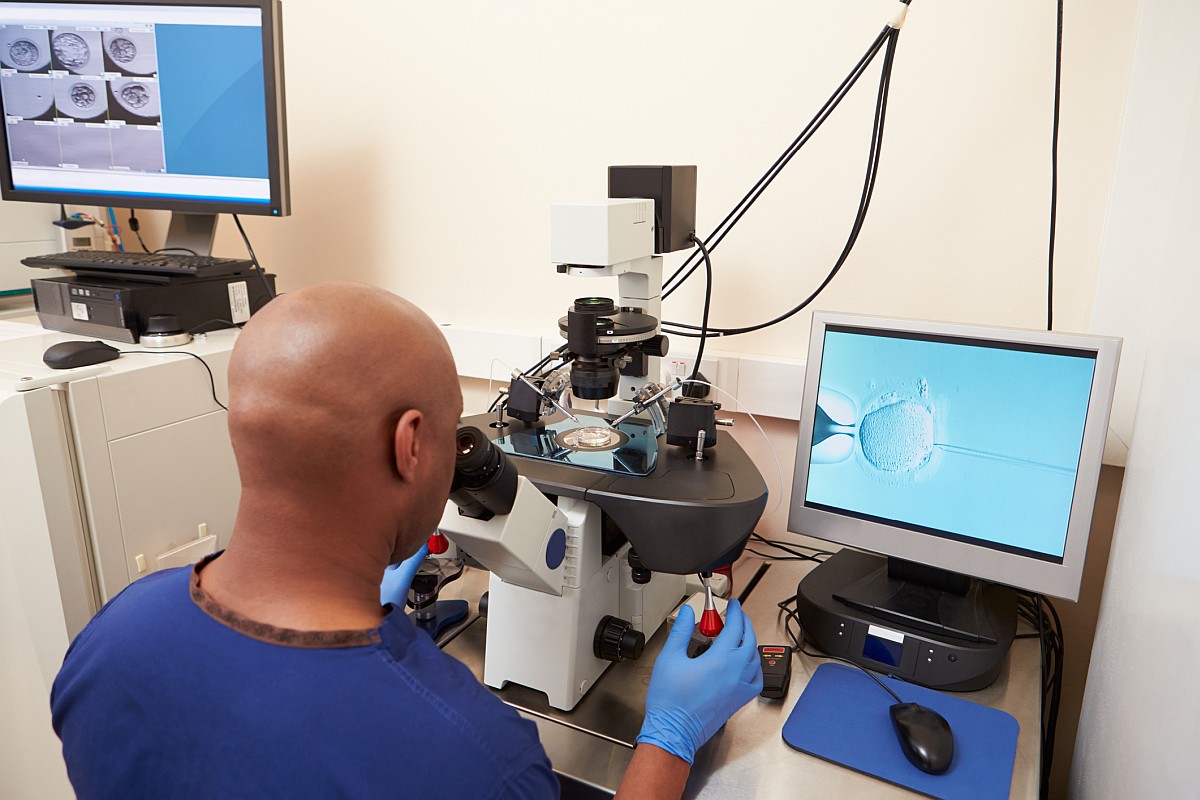
Once thawed, eggs require fertilization to create embryos. Because the freezing and thawing process affects the protective outer layer that normally assists natural fertilization, Dr. Pabon’s embryology team exclusively uses intracytoplasmic sperm injection (ICSI) for frozen eggs.
ICSI involves injecting a single sperm directly into each mature egg using micromanipulation technology. This approach eliminates the uncertainty of whether fertilization will occur and maximizes the chance that each precious thawed egg becomes an embryo.
The sperm can come from a partner or from carefully selected donor sperm for women pursuing single motherhood. The ICSI process itself takes place in FCAG’s state-of-the-art embryology laboratory, where environmental conditions are continuously monitored to optimize fertilization success.
Fertilization rates with ICSI typically range from 70-80% of mature thawed eggs. This means that if eight eggs survive thawing, five to six might successfully fertilize and begin developing as embryos. Understanding these numbers helps women make informed decisions about how many eggs to thaw initially.
Phase Four: Embryo Culture and Development Monitoring
Successfully fertilized eggs begin the remarkable transformation from single cells to complex embryos. Over the next five to six days, the embryology team monitors this development in specialized incubators that replicate the conditions inside the human body.
This culture period represents another critical phase where laboratory expertise significantly impacts outcomes. The embryos require precise temperature control, optimal oxygen levels, and sophisticated culture media that provide the nutrients needed for development.
Not all fertilized eggs will develop into high-quality embryos. Some will arrest at early stages, while others will progress to the blastocyst stage—a 100-200 cell structure that represents the most advanced pre-implantation development.
“The culture phase is where we really see the value of experienced embryology,” Dr. Pabon notes. “Our team has been doing this since 1999, and that depth of experience translates to better embryo development rates and ultimately better pregnancy outcomes.”
Phase Five: Preimplantation Genetic Testing—The Game-Changing Option
One of the most significant advances in fertility treatment over the past decade has been the refinement of preimplantation genetic testing (PGT). This technology allows testing of embryos before transfer to identify those with the correct number of chromosomes—a critical factor in successful implantation and healthy pregnancy.
For women using frozen eggs, PGT offers particular advantages. Since the eggs may have been frozen several years earlier, genetic testing provides current information about embryo quality. Even eggs frozen at younger ages can result in some chromosomally abnormal embryos, while eggs frozen at older ages face higher rates of aneuploidy.
The testing involves carefully removing a few cells from the outer layer of each blastocyst-stage embryo and sending them for genetic analysis. Results typically return within one to two weeks, identifying which embryos are euploid (chromosomally normal) and therefore most likely to result in successful pregnancy.
Rachel chose genetic testing for her embryos. “Out of the six embryos we created, three came back euploid. Knowing that information gave me so much confidence going into the transfer. I wasn’t just hoping—I knew we were transferring a chromosomally normal embryo.”
The statistics support this confidence. Single euploid embryo transfers achieve pregnancy rates of 60-70% per transfer across all maternal ages, since the age that matters is the age of the egg when frozen, not the age of the uterus receiving the transfer.
Phase Six: Embryo Transfer—The Moment Everything Comes Together
The embryo transfer itself is remarkably straightforward compared to the sophisticated processes that preceded it. Dr. Pabon performs the procedure in the office, typically taking just 10-15 minutes with no anesthesia required.
Using ultrasound guidance, he carefully places the selected embryo into the optimal location within the uterus using a soft, flexible catheter. Most women describe feeling nothing more than mild cramping, if anything. The entire process is designed to be gentle and non-traumatic, maximizing the embryo’s chance of successful implantation.
Following the transfer, women typically rest briefly before returning to normal activities. The progesterone supplementation that began before the transfer continues, supporting the uterine lining and creating optimal conditions for implantation.
The following two weeks—the infamous “two-week wait”—represent perhaps the most emotionally challenging phase of the entire journey. Patients oscillate between hope and anxiety, analyzing every subtle physical sensation for signs of pregnancy. Dr. Pabon’s team provides ongoing support during this period, addressing concerns and preparing patients for the pregnancy test that will reveal whether the cycle succeeded.
For Rachel, those two weeks felt eternal. “I convinced myself it hadn’t worked about twenty times. But then that positive test, it made everything worth it. Every appointment, every injection I’d given myself three years earlier, every moment of uncertainty.”
The Success Equation: Understanding What Drives Outcomes
Success rates for using frozen eggs depend on multiple factors, but age at freezing remains the single most important variable. This is precisely why early egg freezing provides such significant advantages: the eggs preserve the fertility potential of the younger age, even when used many years later.
National data provides helpful benchmarks. Women who froze eggs before age 35 and thawed 20 eggs achieve live birth rates of 70-80%. Those who froze between ages 35-37 see success rates around 50% with similar egg numbers. Women who froze eggs in their early forties face success rates of 25-30%, though these women often require more eggs to achieve comparable outcomes.
However, these national averages don’t tell the complete story. Laboratory expertise, embryology protocols, and clinical experience create significant variation in outcomes between fertility centers. Dr. Pabon’s practice consistently achieves results above national averages due to the sophisticated laboratory capabilities and the depth of experience managing every phase from vitrification through embryo transfer.
“The number of eggs frozen matters, but it’s not the only factor,” Dr. Pabon emphasizes. “The quality of the original freezing process, the expertise managing the thaw, the embryology capabilities, the genetic testing when appropriate, and the precision of the transfer all contribute to the final outcome. This is why choosing your fertility clinic matters as much for using eggs as it does for freezing them.”
Why Using Frozen Eggs Differs Fundamentally from Starting IVF at an Older Age
Women sometimes question whether they should have just “waited and done IVF when ready” rather than investing in egg freezing years earlier. Understanding the profound differences between these approaches reveals why preservation provides such significant advantages.
Consider two women: Maria, who froze 20 eggs at age 32, and Lisa, who waited until age 38 to begin IVF. Both are now 38 and ready to start families. Despite being the same current age, their situations differ dramatically.
Maria’s frozen eggs retain the quality and quantity of her 32-year-old fertility. When she returns to use them, she’s working with eggs that have a 70-80% chance of resulting in live birth per 20 eggs thawed. She doesn’t need to undergo ovarian stimulation again: the physically and emotionally demanding process of daily injections and monitoring appointments. Her eggs are ready to be thawed, fertilized, and transferred. If the first transfer doesn’t succeed, she has additional embryos available without repeating the entire cycle.
Lisa, starting IVF at 38, faces a completely different scenario. Her current egg quality reflects her current age, with approximately 40-50% of her eggs likely to be chromosomally abnormal. She must first undergo ovarian stimulation—still demanding but now with a body that may not respond as robustly as it would have six years earlier. She might retrieve fewer eggs than Maria had frozen, and a higher percentage of resulting embryos will be chromosomally abnormal. To achieve the same success probability as Maria, Lisa might need to complete multiple IVF cycles, each costing $20,000-25,000 and requiring weeks of medication and monitoring.
DISCLAIMER: Pricing information in this article reflects 2025 industry averages across multiple clinics and does not represent our current fees. For accurate pricing specific to your situation, please contact our office to arrange a consultation.
The financial implications become striking when viewed this way. Maria’s initial investment of $12,000-15,000 to freeze eggs, plus $7,000-10,000 to use them, totals roughly $20,000-25,000 for significantly higher success rates. Lisa might spend $40,000-60,000 across multiple IVF cycles with lower per-cycle success rates due to age-related egg quality decline.
Beyond the financial calculation, the emotional and time costs differ substantially. Maria enters the process with confidence, knowing her eggs represent her peak fertility. Lisa faces the anxiety of wondering whether her current fertility will allow success, potentially requiring multiple attempts and facing the possibility that her egg quality may not support pregnancy.
“This is why I encourage women to think of egg freezing as buying future options,” Dr. Pabon explains. “You’re essentially purchasing your current fertility at your current age, giving your future self access to those younger eggs whenever you’re ready. The alternative, like waiting and hoping your fertility holds, carries risks that many women don’t fully appreciate until they face them.”
The Emotional Journey: What Women Wish They’d Known
Beyond the medical and financial dimensions, using frozen eggs carries profound emotional weight that catches many women by surprise. Even women who felt confident about their decision to freeze sometimes experience unexpected feelings when the time comes to use them.
The most common emotion women describe is a peculiar mixture of gratitude and grief. Gratitude that their younger selves made this choice, preserving options their current selves desperately want. But also grief for the years that have passed, for relationships that didn’t work out as hoped, or for the biological reality that makes this medical intervention necessary rather than achieving pregnancy naturally.
Dr. Pabon recognizes these emotional layers and ensures his team provides not just medical excellence but genuine psychological support. “We’re not just managing a medical procedure, we’re helping women navigate a life transition that involves hope, anxiety, loss, and possibility all at once. That requires a different kind of care than standardized protocols can provide.”
The two-week wait between embryo transfer and pregnancy test amplifies every emotion. Women obsessively analyze every physical sensation: is that cramping implantation or just progesterone effects? They oscillate between hopeful certainty and pessimistic resignation, sometimes within the same hour. The constant mental chatter of “am I pregnant?” becomes exhausting.
Social situations become minefields during this period. Well-meaning friends and family ask about the process, wanting to be supportive but not realizing that constant discussion intensifies the anxiety. Professional obligations continue, but maintaining focus becomes challenging when so much emotional energy is invested in an outcome still days away from confirmation.
When the pregnancy test is positive, the relief and joy feel overwhelming. But even success carries complicated emotions: excitement mixed with lingering disbelief, happiness shadowed by awareness of how much effort it took to reach this point. The pregnancy itself may feel more precious and fragile than pregnancies that occurred without medical assistance, though data shows no meaningful difference in pregnancy health or birth outcomes.
When the pregnancy test is negative, the disappointment cuts deep. Even women who understood intellectually that success wasn’t guaranteed often feel shocked by the reality of failure. Questions flood in: Should we have done something differently? Do we have enough remaining embryos to try again? Can we emotionally handle another cycle?
This is where the value of personalized care becomes most apparent. Dr. Pabon’s approach ensures that women don’t face these disappointments alone or without a clear path forward. The practice provides immediate consultation to review what happened, adjust protocols if needed, and develop a plan for the next attempt.
Rachel experienced this support when her first transfer, before the successful one, didn’t result in pregnancy. “Dr. Pabon called me personally with the negative result. He spent thirty minutes on the phone explaining what we’d learned from the cycle, why he remained optimistic, and what adjustments we’d make for the next transfer. That kind of care—that made all the difference in my ability to try again.”
Remaining Embryos: Planning for Future Children
One aspect of using frozen eggs that surprises many women is what happens to additional embryos created in the process. When multiple eggs are thawed and fertilized, particularly if genetic testing is performed, women often end up with more than one high-quality embryo after successfully achieving pregnancy with their first transfer.
These remaining embryos represent significant options for family expansion. Women who successfully achieve pregnancy can return months or years later to transfer another embryo for a second or third child, without repeating the entire process. This approach offers several advantages over starting fertility treatment from scratch for subsequent children.
The uterus requires preparation for embryo transfer, but this is far less intensive than ovarian stimulation. Women take medications to build the uterine lining for a few weeks, undergo monitoring appointments to confirm readiness, and proceed with transfer. The entire process from decision to transfer typically takes one menstrual cycle rather than the months required for complete IVF.
The financial advantage is substantial. Each additional embryo transfer costs approximately $3,000-5,000 compared to $20,000-25,000 for a complete IVF cycle. For families planning multiple children, this represents enormous savings.
The emotional benefit is equally significant. Women know exactly what they have in storage—embryos that have already been tested and confirmed to be chromosomally normal. This knowledge provides confidence that families starting from scratch with new fertility treatments cannot have.
Rachel and her husband are already discussing this timeline. “We have two more tested embryos. We’re thinking we’ll come back in two or three years for baby number two, and maybe four years after that for number three. Having that plan, knowing those embryos are there waiting… it gives us incredible peace of mind.”
However, stored embryos also raise complex questions for some families. What happens if you complete your family but still have embryos remaining? Options include continued storage, donation to other couples struggling with infertility, donation to research, or compassionate thawing. These decisions carry ethical and emotional weight that many women haven’t considered until they face them.
Dr. Pabon helps families think through these scenarios proactively. “These conversations aren’t always comfortable, but they’re important. I want families to make informed decisions about their embryos rather than feeling caught off guard years later when storage bills arrive and they realize they need to decide what to do.”
Frequently Asked Questions: Using Frozen Eggs
How long after thawing eggs before embryo transfer occurs? The timeline from thawing to transfer typically takes 5-7 days. Eggs are thawed and immediately fertilized using ICSI. The resulting embryos are cultured for 5-6 days to reach the blastocyst stage before transfer. If preimplantation genetic testing is performed, the timeline extends by 1-2 weeks to allow for biopsy and genetic analysis before transfer of tested embryos.
Can I use some eggs now and save others for later? Yes, this is a common and recommended approach. Women who froze adequate numbers of eggs often thaw a portion for immediate use while keeping the remainder in storage. This provides a second chance if the first attempt doesn’t succeed or allows for additional children in the future without repeating the thawing and fertilization process.
What if none of my eggs survive the thawing process? While rare with modern vitrification techniques, egg loss during thawing can occur. Dr. Pabon’s laboratory achieves survival rates of 90-95%, meaning the vast majority of properly frozen eggs survive thawing. If unexpected loss occurs, women can thaw additional eggs from their storage or, if all eggs were used, may need to consider fresh IVF cycles or other family building options.
Do I need to use all my thawed eggs at once? No, the approach is typically strategic rather than all-at-once. Dr. Pabon recommends thawing a number of eggs sufficient to create several embryos while preserving additional eggs for potential future use. The exact number depends on age at freezing, total eggs in storage, and family planning goals, which is discussed during the consultation phase.
How does the success rate compare between fresh IVF and using frozen eggs? When eggs were frozen at a younger age, success rates typically equal or exceed those of fresh IVF performed at the current older age. For example, eggs frozen at age 32 and used at age 38 typically achieve higher success rates than fresh IVF at age 38, because the egg quality reflects the younger age. However, fresh IVF at the same age the eggs were frozen would have slightly higher success rates than frozen eggs from that age.
What if I’m in a different relationship than when I froze my eggs? The eggs belong to you and can be used with any partner or with donor sperm if you’re pursuing single motherhood. Many women freeze eggs before finding their long-term partners. The eggs remain your reproductive property regardless of relationship changes, though you’ll need to provide appropriate consent and complete required legal documentation if using donor sperm.
How much time should I plan to take off work for the transfer process? The embryo transfer itself is a simple outpatient procedure requiring no recovery time. Most women return to work the same day or the next day. However, you’ll need time for several monitoring appointments in the week or two leading up to transfer, typically 2-4 visits. Many women schedule the transfer on a Friday to have a relaxed weekend afterward, though bed rest is not required.
What happens if the first transfer doesn’t work? If pregnancy doesn’t occur, Dr. Pabon will consult with you to review the cycle, determine if any protocol adjustments are warranted, and plan the timing for another transfer if additional embryos are available. Most women wait one normal menstrual cycle before attempting another transfer, allowing the body to reset. The personalized approach ensures each subsequent attempt is optimized based on what was learned from previous cycles.
The Lakewood Ranch Advantage: Boutique Care at a Pivotal Moment
The decision of where to use your frozen eggs matters as much as where you originally froze them. Women who preserved their fertility at Dr. Pabon’s practice benefit from laboratory continuity and deep familiarity with their specific situation. But even women who froze eggs elsewhere increasingly choose Fertility Center and Applied Genetics of Florida (FCAG) for the usage phase, seeking the personalized care and superior outcomes that a boutique practice provides.
The difference becomes apparent in the details. At corporate fertility chains, women often work with different physicians throughout their journey, see rotating residents for monitoring appointments, and follow standardized protocols regardless of individual circumstances. Dr. Pabon provides personal continuity throughout the process, adjusting protocols based on individual response and maintaining direct involvement from consultation through pregnancy confirmation.
The laboratory capabilities matter enormously at this phase. The sophisticated embryology required for successful thawing, ICSI fertilization, extended culture, and genetic testing demands experienced staff and advanced technology. FCAG’s laboratory has been performing these procedures since 1999, developing the refined techniques that translate to superior outcomes.
The location advantage cannot be overstated for Lakewood Ranch families. Rather than commuting to Tampa or dealing with the faceless large institutional practices, women receive world-class care close to home with the kind of personal attention that busy professionals appreciate in every aspect of their lives.
Your Next Step: From Preserved Potential to Growing Reality
For women with frozen eggs, the moment of decision carries weight precisely because the investment was so carefully considered years earlier. The eggs represent not just biological material but the hopes, planning, and strategic thinking of your younger self. Using them means honoring that decision and transforming preservation into the family you envisioned.
Dr. Pabon’s comprehensive consultation process ensures you enter this phase with complete clarity about expectations, protocols, costs, and support. Whether your eggs have been stored for one year or ten, whether you’re partnered or pursuing single motherhood, whether you’re returning to the practice where you froze them or choosing FCAG for the usage phase—the personalized approach ensures your unique situation receives the attention it deserves.
The consultation includes review of stored egg quantity and quality assessment, comprehensive fertility hormone testing to evaluate current uterine health, detailed discussion of fertilization and embryo culture protocols, explanation of genetic testing options and implications, realistic success projections based on your specific circumstances, transparent cost breakdown with financing options, and emotional support resources for the journey ahead.
Rachel’s final reflection captures the profound meaning this journey holds. “Using my frozen eggs wasn’t just a medical procedure—it was completing a circle I’d started years earlier when I decided to take control of my fertility timeline. That younger version of me made a gift to this current version, and now I’m creating the family we both wanted. It’s remarkable when you think about it—these eggs connected who I was to who I’ve become.”
For women ready to transform their preserved fertility into growing families, the Fertility Center and Applied Genetics of Florida provides the expertise, technology, and personalized care that this pivotal moment deserves. Dr. Pabon’s 25+ years of experience and commitment to boutique-level attention ensure that the investment you made in egg freezing achieves its ultimate purpose: the family you’ve been planning for. To schedule a comprehensive consultation, contact the practice to begin your journey from preservation to parenthood.