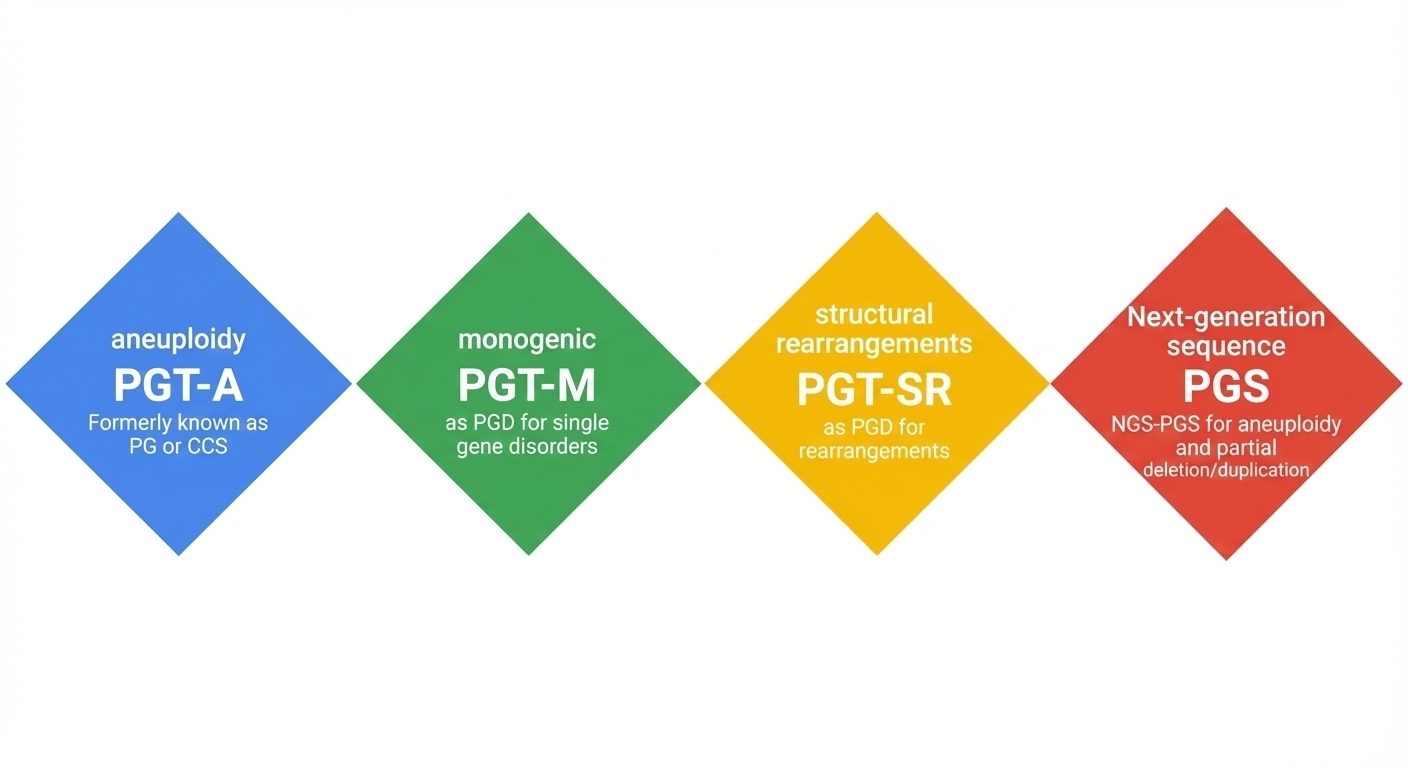
Purposes of PGT-A, PGT-M, and PGT-SR
As IVF technology has advanced, so has the complexity of genetic testing options. For patients exploring fertility treatment, three (Preimplantation Genetic Testing) PGT types matter most: PGT-A, PGT-M, and PGT-SR.¹
PGT-A: Screening for Chromosome Number
PGT-A (Preimplantation Genetic Testing for Aneuploidy) examines whether embryos contain the correct number of chromosomes. Embryos with too many or too few chromosomes are more likely to fail implantation, result in miscarriage, or lead to conditions such as Down syndrome.³⁹
Best candidates for PGT-A:
- Women 35 and older seeking to reduce age-related chromosomal risks²
- Couples experiencing recurrent implantation failure or repeated miscarriage where chromosomal issues are suspected³
PGT-M: Testing for Specific Inherited Diseases
PGT-M (Preimplantation Genetic Testing for Monogenic disorders) targets known genetic mutations when one or both parents carry specific gene variants—such as those causing cystic fibrosis, sickle cell disease, or certain cancer predisposition syndromes.³
Best candidates for PGT-M:
- Couples who have identified genetic mutations through carrier screening
- Families with a child affected by a known single-gene disorder seeking to prevent recurrence
PGT-M requires custom test design for each family’s specific mutation, but provides powerful protection against transferring affected embryos.³
PGT-SR: Addressing Chromosomal Structural Problems
PGT-SR focuses on parents with balanced chromosomal rearrangements, such as translocations or inversions. While these individuals typically remain healthy, they’re more likely to produce embryos with missing or duplicated chromosome segments, increasing miscarriage risk and potential birth defects.⁴
Best candidates for PGT-SR:
- Patients diagnosed with balanced translocations or similar structural chromosome arrangements
- Couples with multiple miscarriages and abnormal karyotype results
PGT-SR can significantly reduce recurrent loss risk by identifying chromosomally balanced embryos for transfer.³
Choosing the Right Test
The decision doesn’t fall entirely on patients’ shoulders. Comprehensive fertility evaluation should include:
- Age and IVF history review
- Prior genetic or chromosome testing results
- Family history assessment for genetic diseases
- Analysis of previous pregnancy losses or cycle failures
For many couples, the appropriate choice becomes clear once their complete risk profile is understood. PGT-A remains most common, but when known mutations or chromosomal rearrangements exist, PGT-M or PGT-SR can be transformative.
Cost and Coverage Considerations
- PGT-A: Typically costs $3,000-5,000 per cycle
- PGT-M: Usually ranges $4,000-6,000 due to custom probe development
- PGT-SR: Similar to PGT-M in cost and complexity
Insurance coverage varies widely. Some plans cover PGT when medically indicated (such as known genetic conditions), while others classify it as experimental. Patients should verify coverage before beginning treatment.
Expert Guidance Makes the Difference
Choosing between PGT-A, PGT-M, and PGT-SR requires more than just understanding the technical differences—it demands experience with how each test performs in real-world clinical situations. Dr. Pabon and the team at Fertility Center & Applied Genetics of Florida have been pioneers in preimplantation genetics since their first successful PGD pregnancy in 1999, giving them unique insight into which patients benefit most from each testing approach.
Rather than navigating these complex decisions alone, Tampa Bay families can benefit from genetic counseling that draws on over two decades of hands-on PGT experience. Whether you’re dealing with advanced maternal age, known genetic risks, or recurrent loss, FCAG’s comprehensive genetic testing program—available to patients from throughout the region including Riverview and Brandon—can help determine the most appropriate path forward. Schedule a consultation to discuss which type of genetic testing, if any, makes sense for your specific situation.
References
- De Rycke M, et al. ESHRE PGD Consortium data collection XIII: cycles from January to December 2010 with pregnancy follow-up to October 2011. Hum Reprod. 2015;30(8):1763-1789.
- Harton GL, et al. Diminished effect of maternal age on implantation after preimplantation genetic diagnosis with array comparative genomic hybridization. Fertil Steril. 2013;100(6):1695-1703.
- Sermon K, et al. PGD in the 21st century: unravelling the complex molecular basis of preimplantation genetic diagnosis. Hum Reprod Update. 2016;22(1):20-35.
- Alfarawati S, et al. The relationship between blastocyst morphology, chromosomal abnormality, and embryo gender. Fertil Steril. 2011;95(2):520-524.